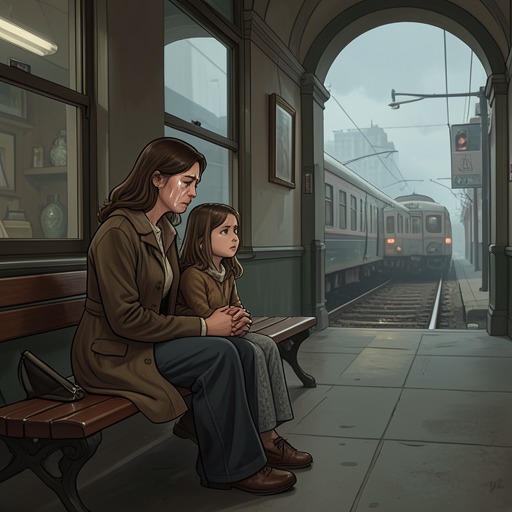
Judah Loeb–Hannah Loeb father-daughter relationship
Here There Is No WhyJudah Loeb and Hannah Loeb’s father-daughter relationship is also the working partnership at the heart of Judah’s return to Jerusalem: Hannah refuses to remain a protected child on the edges of his investigation, while Judah gradually recognizes that her judgment and presence are among his most trusted resources. Their closeness is practical as well as emotional, shaped by argument, shared inquiry, and the grief they carry after Mary Loeb’s death.
Identity and Background
In July 2005, Judah arrives in Jerusalem after twenty-two years away. Hannah is with him, but the trip quickly becomes more than a family visit: her history project brings her into contact with Kamal, a Palestinian imprisoned after a failed suicide-bombing attempt. Judah’s first response is parental alarm. He wakes to find Hannah preparing to meet a jailed would-be bomber, and his objections range from her lack of Hebrew and unfamiliarity with local transportation to the danger posed by the ongoing intifada. His concern is real, but it also exposes the limits of the authority he assumes he can exercise over her.
The relationship is already marked by an intimacy in which Hannah can challenge Judah directly. When he treats the outing as something he will decide for both of them, she makes clear that she has her own purpose. Judah’s initial reasoning—that she is his daughter and should listen while they are abroad—does not settle the matter. Their exchanges reveal a father who instinctively tries to protect and direct, and a daughter who expects to be taken seriously as an independent participant.
From Protection to Partnership
Hannah’s interview with Kamal becomes part of Judah’s investigation rather than a side project. Michal records the interview, and Hannah later tells Judah that the footage may explain Chaim Lerner’s death and help with his book. She wants him to watch it, even though Michal worries it will upset him. Hannah has already cried after seeing the interview, but she distinguishes her reaction from the decision to show it to her father. Her judgment is not presented as infallible; it is nevertheless substantial enough that Judah considers it worth exploring.
The video also establishes Hannah as an active investigator, not simply a companion brought along by her father. She has pursued a source, secured an interview, and formed an interpretation of what it might mean. In the café, her disagreement with Michal becomes a physical argument expressed through gestures: Hannah rhythmically strikes one fist into her palm while Michal points close to her ear. Judah recognizes both women’s familiar ways of quarreling. Although Hannah and Michal have known one another for barely two days, their quarrel strikes him as resembling that of a mother and daughter. The moment places Hannah’s forceful closeness with Michal beside the developing investigative bond between Hannah and Judah.
After Yoav Lerner explains his father’s moral crisis through the story of killing two Lebanese boys during the Lebanon War, Hannah asks where Yoav was on the night Chaim died. Her question carries the inquiry from abstract ethical reasoning toward the circumstances of the death itself. Later, when Charlie asks to speak privately with Judah, Hannah refuses to leave. She insists on hearing the conversation because, in her view, they have an understanding. Judah recognizes that she sometimes establishes such agreements on the spot, but does not force the issue. He has found her interview fascinating and her analysis of Chaim’s story intriguing, even if not conclusive. More importantly, he admits to himself that no one knows him better or commands more of his trust. That trust unsettles him precisely because it is so complete.
Shared Encounters with Suicide and Grief
Kamal’s interview brings Hannah’s own bereavement into the investigation. In a letter addressed to her, Kamal explains that he searched for her online and learned about her mother’s death. He distinguishes his attempted murder from Mary’s suicide: he sees Mary as sick and frightened, someone who did not try to kill another person, and urges Hannah not to judge her mother but to love her. His account does not erase the pain of Mary’s death; it gives Hannah a stranger’s interpretation of it, shaped by Kamal’s recognition of fear and loss in both their lives.
Hannah reads the letter with tears running down her face while keeping her voice clear and even, as if part of her is crying and another part is still analyzing what she hears. When she finally breaks down, Judah moves beside her and puts an arm around her. He understands his role as comforting her rather than weeping alongside her, and wonders how many more times she will cry in his arms. Hannah sobs against his neck before gradually pulling away; she then uses the napkin he gives her to dab at his shoulder. The small reversal—her trying to dry his shirt while he tries to comfort her—makes their care reciprocal even within Judah’s familiar effort to be the steady parent.
The episode also changes how Judah sees the decision to bring Hannah to Jerusalem. He thinks of Ilana’s warning and regrets exposing his daughter to an investigation in which every path seems to lead back to suicide. Yet Hannah has not been merely subjected to that inquiry: her history project and interview with Kamal helped open one of its paths. The trip binds their separate encounters with suicide together, while making Judah conscious of the emotional cost of pursuing the truth beside her.
Confession and Changing Intimacy
Hannah’s questions eventually turn from the investigation to Judah’s own life. When she asks whether he had been secretly seeing Michal, Judah initially searches for a response, then finds himself crying in front of his daughter. Hannah comforts him by patting his hand and asking how he could have kept the visits secret if she had been present. Her gentle teasing does not deflect the question; it gives him room to answer.
Judah tells Hannah that Michal came to New York several times a year after Mary died. He says the visits were mostly sexual, but not meaningless; they mattered, although not in the way they once had. When Hannah asks whether the relationship had continued while Judah was married to Mary, he closes his eyes and cries again. The passage establishes the question and his inability to answer it aloud in that moment, without resolving what he would have said. The exchange marks a shift in their roles: Hannah is still the daughter receiving her father’s confidence, but she is also the person asking him to account for choices he might prefer to keep private.
Narrative Role and Significance
The relationship’s movement is not from conflict to effortless agreement. Hannah continues to resist being left out, and Judah’s protective instincts remain visible in his worry about her safety and his attempts to control what she hears. What changes is his willingness to treat her involvement as valuable rather than merely dangerous. He lets her stay for Charlie’s private conversation, takes her reading of Chaim’s story seriously, and confides in her about Michal. His trust becomes an acknowledgment that the investigation is not his alone.
Hannah, in turn, occupies several roles at once: daughter, interviewer, interpreter of evidence, witness to her father’s vulnerability, and the child whose grief over Mary is addressed directly by Kamal. Their partnership gives the inquiry an intimate counterpoint. Questions about Chaim’s death and Yoav’s wartime account are pursued alongside questions about what a father owes a daughter, what a daughter can bear to hear, and how grief alters the boundaries between parent and child. Their closeness lies not in the absence of disagreement, but in their repeated return to one another—as collaborators in the investigation and as the people who comfort, challenge, and confide in each other.